
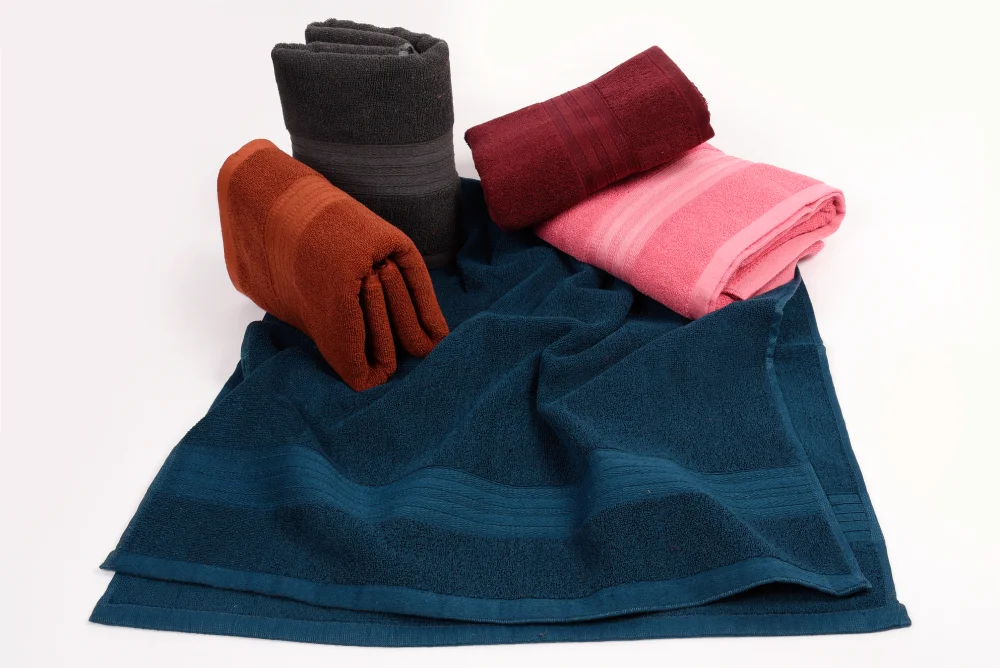
Terry Towel Manufacturers in India: Piece-Dyed vs Yarn-Dyed
A coloured towel can look flawless at dispatch. The harder test comes after commercial laundry, bleach exposure, sun drying, and a repeat order six months later. That is why experienced buyers ask how a towel was dyed before they compare supplier quotes.
Dyeing is not just about appearance. It affects colour choice, order cost, replenishment accuracy, and the risk of colour bleeding. This guide helps you make that decision before production begins.
Piece-Dyed vs Yarn-Dyed Towels
Piece-dyed towels are usually the practical choice for economical solid-colour towel orders for hotels and institutions. Yarn-dyed towels work better for stripes, woven borders, and detailed patterns. Neither method guarantees better colourfastness by itself. The final result depends on dye selection, cotton preparation, fixation, wash-off, and testing. Terry Towel manufacturers in India should recommend the route based on your design, laundry conditions, and repeat-order needs.
What Is the Difference Between Piece-Dyed and Yarn-Dyed Towels?
Piece dyeing colours terry fabric after weaving. Yarn dyeing colours cotton yarn before weaving begins.
The terms describe when colour enters the production line. In the piece dyeing process, the mill first weaves undyed greige fabric. Greige means fabric in its unfinished loom state. The completed terry fabric then enters a dye bath.
The yarn dyeing process happens earlier. Cotton yarn is coloured before it reaches the weaving machine. Package dyeing is a common method. Yarn packages sit on spindles while dye liquor moves through them at controlled pressure and temperature.
This timing gives yarn dyeing its main advantage. The weaving plan can place colour exactly where a stripe, border, check, or motif belongs. A true woven stripe cannot be made after fabric has been piece dyed.
How Terry Towel Manufacturers in India Choose the Dyeing Route
Terry Towel manufacturers in India select a dyeing route according to the design, quantity, budget, and repeat-order requirement. One route is not automatically better.
A hotel ordering 5,000 navy bath towels rarely needs yarn dyeing. Piece dyeing is normally the sensible route. It creates an even solid shade. It also allows shade approval after the towel construction is finalised.
A retail buyer ordering white towels with coloured border stripes has another requirement. Those stripes should be yarn dyed. The colour becomes part of the woven construction rather than a later surface treatment.
| Buying requirement | Better route | Why it works |
| White, black, navy, or other solid towels | Piece dyed | Efficient for uniform full-body colour |
| Hotel replenishment programs | Piece dyed with approved lab dip | Supports controlled repeat shades |
| Striped towel sets | Yarn dyed | Coloured yarn creates woven stripes |
| Jacquard border towels | Yarn dyed | The pattern develops during weaving |
| Short-run shade development | Piece dyed | Colour can be developed after weaving |
| Premium retail patterns | Yarn dyed | Gives greater woven-colour control |
A lab dip is a small dyed swatch sent for shade approval. Approve it before bulk dyeing starts. This avoids later arguments about whether a teal shade looks too blue or too green.
Which Dyeing Method Gives Better Colourfastness for Hotel Towels?
Neither method automatically gives better colourfastness. Dye fixation, washing, and quality control determine whether a towel keeps its shade.
Colourfastness rating measures how well a textile resists fading or staining in defined conditions. Hotel and laundry buyers usually care about laundering, rubbing, water, chlorine, and light. AATCC TM61 is one recognised accelerated method for testing colourfastness to laundering.
For cotton terry, reactive dyeing is widely used because dye can bond chemically with the cotton fibre. The recipe still needs control. Poor fixation leaves unfixed colour close to the fibre surface. That is where colour bleeding and dye migration can begin.
Dye migration occurs when loose dye transfers to another fabric. You may see pale staining on white laundry. You may also find uneven patches after drying. It is not inherently a yarn-dyed or piece-dyed failure. Weak fixation, inadequate wash-off, or an unsuitable recipe usually causes it.
Ask the supplier which test method applies. Then ask for the result for your specified colour and construction. A vague promise of “fast colour” is not a usable purchase specification.
How Do Cost, Finish, and Repeat Orders Differ?
Piece dyeing is generally more economical for solid shades. Yarn dyeing costs more because colour preparation happens before weaving.
That added step does not make yarn dyeing an unnecessary expense. It is often the right investment for branded patterns. With striped/jacquard border towels, colour is built into the towel structure, rather than applied across finished fabric.
| Factor | Piece dyed | Yarn dyed |
| Best design type | Solid colour towels | Stripes, checks, borders, woven patterns |
| Production sequence | Weave, then dye | Dye yarn, then weave |
| Cost profile | Usually lower for plain shades | Usually higher due to yarn preparation |
| Design flexibility | Strong for one-colour designs | Strong for multicolour woven layouts |
| Visual finish | Uniform surface colour | Defined woven colour placement |
| Repeat-order control | Lab-dip and fabric dye-lot control | Yarn-shade and weaving-layout control |
Dye lot consistency matters for hotel groups, distributors, and private-label brands. A dye lot is a defined batch produced under one controlled recipe. Two orders can share a colour name and still look different in daylight if the shade standard is poorly controlled.
Keep a signed finished-towel cutting from your first order. Ask the supplier to compare future production against that physical reference under controlled lighting. A phone image cannot serve as a reliable colour standard.
What Should You Ask Towel Manufacturers in India?
Towel manufacturers in India should explain the dyeing route clearly and support the answer with samples or test records. Vague answers should concern any bulk buyer.
Use these questions before final approval:
- Is the towel piece dyed, yarn dyed, printed, or a combination?
- Which dye class is planned for this cotton construction?
- Can you provide an approved lab dip or yarn-shade standard?
- Which colourfastness tests will apply to the order?
- How will you control batch-to-batch colour matching?
- Does the purchase specification require azo-free dyes?
- Will the towels be checked for colour bleeding before dispatch?
India restricts the use of benzidine-based dyes and their salts and has prohibited the handling of 70 specified azo dyes. For export orders, buyers should state any azo-free requirements clearly and request documentation that meets the requirements of the destination market.
Confirm the destination market’s colour, chemical, and testing requirements before approving bulk production. This avoids last-minute changes to the dyeing recipe, test plan, or product specification.
Factory Insight: Where Colour Failures Begin
Colour failures usually begin before final packing. Pretreatment, recipe accuracy, fixation, wash-off, and controlled-light inspection are the key control points.
Vertex Textile Industries was established in Solapur in 1986. The company has around four decades of towel manufacturing experience. Solapur is one of India’s established terry towel manufacturing clusters, with long-standing skills in towel weaving and production.
That background supports a simple working rule: agree on the colour standard before bulk production. Compare the finished towels with the same approved reference to avoid colour-related disagreements and costly disputes after delivery.
For Terry Towel manufacturers in India, cotton dye absorption also needs attention. Terry fabric contains dense pile loops. Uneven preparation or poor liquor flow can create visible shade differences between the pile and ground. An efficient supplier should identify this risk and explain how it is controlled.
At Vertex Textile Industries, dyeing and quality checks follow the performance expectations associated with OEKO-TEX®, ISO 9001:2015, GOTS, and BSCI standards. This keeps the focus on reliable shade matching, colourfastness, proper wash-off, and consistent quality across bulk towel batches.
How Should You Choose for Your Bulk Order?
Choose piece dyeing for solid-colour towels and cost-conscious bulk programs. Choose yarn dyeing when woven stripes, borders, or multicolour detail are central to the design.
For hotel towels, begin with performance. Specify the colourfastness rating needed for your actual laundry conditions. For retail and private-label towels, begin with the design. Then decide whether the richer woven appearance justifies yarn dyeing’s added production stage.
Vertex Textile Industries can help you review towel construction, shade references, and testing expectations before production begins. This is especially useful when a repeat consignment must match an earlier order.
Speak with Vertex Textile Industries about Terry Towel manufacturers in India and the appropriate dyeing route for your bulk towel order.
FAQ
What is the difference between piece-dyed and yarn-dyed towels?
Piece-dyed towels are coloured after terry fabric is woven. Yarn-dyed towels use coloured yarn before weaving. Piece dyeing suits solid colours, while yarn dyeing is needed for woven stripes, checks, and patterned borders.
Which dyeing method gives better colourfastness for hotel towels?
Neither route is automatically better. Dye selection, fixation, wash-off, and testing control the outcome. Ask for laundering and rubbing test results that reflect your property’s actual wash conditions before ordering.
Do terry towel manufacturers in India use azo-free dyes?
Many export and retail specifications require azo-free dyes. Include the requirement in your purchase order and request current supporting records. India also restricts specified azo- and benzidine-based dyes.
Are piece-dyed towels cheaper than yarn-dyed towels?
Usually, yes, particularly for solid-colour programs. Yarn dyeing adds preparation before weaving. It remains the right option when you need durable woven stripes or jacquard border towels.
How can I control colour matching on a repeat towel order?
Approve a physical lab dip or finished-towel cutting before production. Retain that reference for repeat orders. Ask the supplier to match it under controlled lighting and confirm the dye lot before bulk production.
