
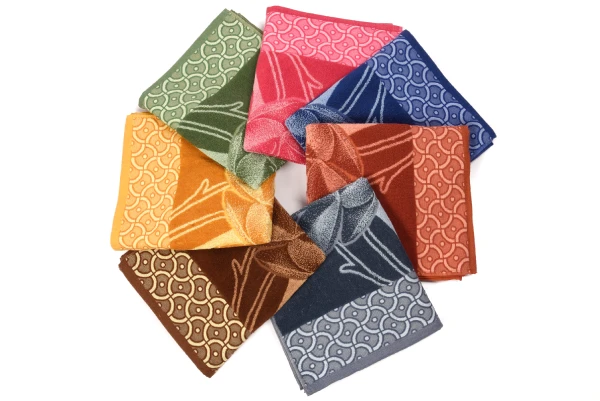
Rapier loom vs Handloom: How Solapur Terry Towels Are Made
Most Solapur Terry Towel production is associated with Rapier loom manufacturing rather than traditional handloom weaving. A Government of Maharashtra study reports 600 units in the Solapur textile cluster, including 480 units producing terry towels, about 80% of the cluster. The cluster produces approximately 54,000 tonnes of finished material annually.
Rapier looms use mechanical power to weave cotton yarn into terry fabric at commercial scale, providing the speed and consistency required for bulk towel production. The District Solapur administration reports around 25,000 rapier looms in the district and identifies towels and napkins among the principal products manufactured on Jacquard Rapier looms.
The Essentials for Bulk Buyers :
- Terry Towel Solapur production is now over 95% Rapier loom, not handlooms.
- Rapier loom weaves faster and more consistently, which matters for bulk orders.
- Solapur terry towel holds a Geographical Indication (GI) tag registered in 2005.
- The GI tag protects the “Solapur” name; it does not certify individual factory output.
- Always verify a supplier’s manufacturing base directly rather than relying on the city name alone.
Ask ten buyers where their towels come from, and most will say “Solapur” without knowing what that actually means. Fewer still know how those towels are woven today.
Most Solapur terry towel manufacturing today relies on Rapier loom machines rather than traditional handlooms. Rapier looms are motor-driven weaving machines that produce towel loops faster and with greater consistency than manual weaving. Over time, Rapier loom production became central to Solapur’s commercial towel industry, supporting the volume and consistency required for domestic and export orders.
The confusion is understandable. Marketing copy across the industry still leans on handloom imagery: artisans, wooden looms, and slow craft. That picture may sell a story, but it does not necessarily reflect how terry towel factories in Solapur operate today. Understanding the actual production method helps you ask better questions before placing a bulk order.
Why Does the Weaving Method Matter to a Buyer?
The weaving method affects consistency, speed, and cost, three things that matter directly to a bulk buyer’s timeline and budget.
Solapur is an established terry towel manufacturing and export cluster. MSME Development Institute records ₹400 crore in exports from the city’s Terry Towel Cluster, while the District Solapur administration notes that towels and napkins made on Jacquard Rapier looms are exported to various countries. For bulk buyers, the key consideration is not which weaving method sounds more traditional, but which one can deliver consistent quality at the required volume and speed.
A handloom weaver, however skilled, cannot match a Rapier loom’s output speed. That difference shapes your lead time, your price per piece, and how consistent your towels look across a 5,000-piece order.
How Rapier Loom Weaving Actually Works
A Rapier loom uses a motorised shuttle system to interlace cotton yarn into towel loops, following the same weaving logic as a handloom but at industrial speed.
Terry towel weaving relies on the terry weave, a looped-pile structure where extra yarn loops stand up from the base fabric to absorb water. These raised loops give terry towels their characteristic texture, softness, and absorbency, distinguishing them from flat-woven cotton fabric. A Rapier loom creates this looped structure mechanically, controlling factors such as loop height and density throughout the fabric.
Solapur’s established terry towel industry has been built around large-scale Rapier loom manufacturing. Vertex Textile Industries has been part of this manufacturing base since 1986. Over close to four decades, our team has developed practical experience in the weaving processes, machinery, and production controls that matter when manufacturing towels for commercial and bulk orders.
Jacquard attachments, a mechanism that lets a loom weave patterns and logos directly into the fabric, are common on modern Solapur Rapier looms. This is how woven logos and border designs get built into a towel without printing or embroidery.
What Does This Mean for Different Buyers?
The practical impact of Rapier loom production depends on what you are buying and how much consistency you need.
| Buyer Type | Why Rapier Loom Production Matters |
| Hotel procurement manager | Consistent GSM and loop density across large repeat orders |
| Importer | Faster production cycles support tighter shipping schedules |
| Private-label brand | Jacquard capability supports woven logos without extra steps |
| Distributor | Predictable output supports reliable restocking |
An importer ordering for twelve locations cannot afford loom-to-loom variation. Rapier loom production, run under consistent factory conditions, keeps GSM and weave density stable across the full order. That consistency is harder to guarantee from small handloom units working independently.
This is why serious bulk buyers of Solapur terry towel products ask about loom type early in a supplier conversation, not as an afterthought. The weaving method can influence price, production timelines, and consistency in GSM, dimensions, and overall finish across a bulk shipment.
Understanding the GI Tag: What It Does and Does Not Mean
Before Placing a Bulk Order, Check: The GI tag protects “Solapur Terry Towel” as a registered geographical indication linked to its place of origin. However, it does not certify the quality or output of any individual factory.
Terry Towel in Solapur is a registered Geographical Indication under India’s GI framework, with the registration recorded by the Geographical Indications Registry under the Controller General of Patents, Designs and Trade Marks. The GI establishes a legal connection between the registered name and its defined geographical origin.
GI-tagged products such as Solapur Terry Towel, Darjeeling Tea and Banarasi Silk are protected through India’s geographical-indication framework because their names are associated with a particular place and defined product characteristics. This makes the GI relevant when buyers encounter geographical claims in supplier or marketing material.
For buyers, however, the GI should be treated as a starting point, not a final quality guarantee. It does not, by itself, tell you whether a particular manufacturer’s towels meet your required GSM, dimensions, colour consistency, testing standards, or export documentation. Those factors still need to be verified directly with the supplier.
Pro tip: When evaluating a Solapur towel supplier, ask for the factory address, manufacturing details, product specifications, and relevant quality documentation rather than relying only on a regional-origin claim. A genuine manufacturer should be able to provide clear information about how and where the towels are produced.
- Factory location and production photos or video
- Loom type used (Rapier loom vs handloom) for your specific order
- GSM consistency across sample batches
- Export documentation and past shipment history
- Lead time based on current loom capacity
Inside Vertex Textile Industries: What Bulk Buyers Get
Vertex Textile Industries was established in Solapur in 1986 and has around 40 years of manufacturing experience, operating from within one of India’s established terry towel manufacturing clusters. Our Rapier loom units run jacquard weaving in-house, so woven logos and border patterns come directly off the loom rather than through a separate finishing step.
Here is a factory-level detail worth knowing: we run loop-height checks on sample swatches from every production batch before full runs begin, because even a small shift in loop density changes a towel’s absorbency and hand-feel. As a direct manufacturer, we skip trading intermediaries, which keeps your lead time and pricing tied to our actual production schedule, not a reseller’s margin.
The Solapur Standard, Made by Vertex Textile Industries
Rapier loom weaving is not a shortcut; it is how modern Terry Towel in Solapur meets global demand without losing consistency. Understanding this helps you ask sharper questions before you commit to a bulk order.
Talk to Vertex Textile Industries today and see how Solapur terry towel manufacturing comes together, from loom to shipment.
Frequently Asked Questions (FAQ)
Why is Solapur famous for terry towels?
Solapur built a large Rapier loom manufacturing base over decades, combined with easy access to cotton yarn and a long weaving tradition. This scale and consistency made Terry Towel in Solapur known across India and abroad.
How do I verify a genuine Solapur GI towel?
Ask your supplier for their factory location, production photographs, and GI registration reference. A genuine Solapur manufacturer will confirm their factory sits within the registered geographical region without hesitation.
What is the export process for Solapur terry towels?
Export typically involves sample approval, bulk production, quality inspection, and shipping documentation such as invoices and certificates of origin. Timelines vary by order size and destination country’s customs requirements.
Which are the top-rated terry towel manufacturers in Solapur for bulk export orders?
Look for manufacturers with direct factory ownership, transparent production photos, and a documented export history. Vertex Textile Industries manufactures directly from Solapur, offering bulk export support and consistent GSM output.