
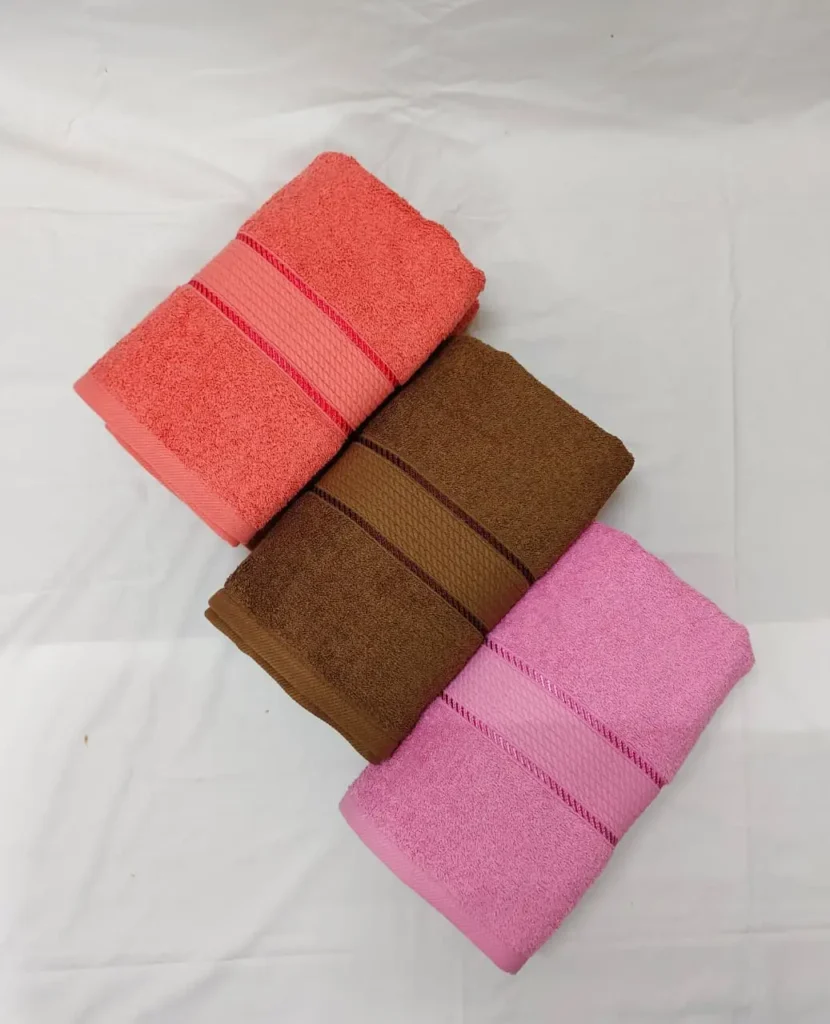
Terry Towel Exporters in India: The Vacuum-Bale Packing Math That Cuts Freight Cost Per Piece
For overseas buyers sourcing in bulk, the invoice price on a towel rarely decides the real landed cost. Freight does. Most Terry Towel exporters in India still ship loosely packed cartons, which waste usable container space and quietly inflate the freight-per-piece figure a buyer actually pays. Hydraulic vacuum-bale packing changes that equation by compressing folded towels before sealing, which lowers the volumetric weight ocean carriers bill against. This guide walks through the exact carton math, covering dimensions, pieces per container, and cost per piece, so you know what to ask your terry towel exporter in India before your next booking.
That difference shows up fastest in the numbers. Loose carton packing typically wastes 25 to 35% of usable container volume on terry towels, since they are light per piece but bulky once folded. Hydraulic vacuum-bale packing compresses that fold loft and draws out the trapped air, cutting CBM per piece without changing GSM, size, or piece count. On a 40ft high-cube container, baled packing can lift loadable pieces by roughly 45 to 50% at the same freight spend, which is exactly why it pays to ask any Terry Towel exporter in India for their bale compression ratio and carton dimensions, not just their FOB price.
Why Freight, Not Fabric, Decides Your Cost Per Towel
Ocean freight is billed on whichever is higher: gross weight or volumetric weight, also called revenue tonnage. Terry towels sit firmly in the second category: light per piece, but bulky once folded loose in a carton. That’s why two Terry Towel exporters in India quoting an identical FOB price can still leave a buyer with very different landed costs. One ships loose cartons; the other ships compressed bales. The freight gap between them can easily exceed the fabric price difference on the invoice, which is why serious buyers now request carton and bale specifications alongside the quotation, not after the order is placed.
Loose Carton Packing vs Hydraulic Vacuum-Bale Packing
What Actually Changes Inside the Bale
A folded terry towel holds air between its looped pile and its folds. This is what gives it that soft, stacked look in a retail carton, and it is also what wastes container space. Hydraulic press baling flattens that fold loft under controlled pressure, and a vacuum stage then draws out the remaining air pockets before the bale is strapped and sealed. Weight and piece count stay exactly the same; only the volume shrinks. The table below compares three packing formats for a standard 500 GSM cotton bath towel, folded to a common 48-piece unit.
| Packing Method | Unit Size (L×W×H, cm) | Pieces / Unit | CBM per Piece | Volume vs Loose |
|---|---|---|---|---|
| Loose carton (standard export polybag + carton) | 60 × 40 × 45 | 48 | 0.00225 | Baseline |
| Hydraulic press bale (no vacuum) | 60 × 40 × 34 | 48 | 0.00170 | ≈ 24% less |
| Hydraulic vacuum-bale packing | 60 × 40 × 30 | 48 | 0.00150 | ≈ 33% less |
The CBM Math on a 40ft High-Cube Container
A 40ft high-cube container has roughly 76 usable CBM once dunnage and pallet loss are accounted for. Using the per-piece CBM savings from the table above, and an illustrative ocean freight rate of USD 90 per CBM (confirm current rates with your forwarder, as they move with fuel surcharges and lane demand), the difference in freight cost per piece becomes concrete rather than theoretical.
| Packing Method | Pieces Loaded (40ft HC) | Container Freight | Freight Cost / Piece |
|---|---|---|---|
| Loose carton packing | 33,777 pcs | $6,840 | $0.202 |
| Hydraulic vacuum-bale packing | 50,666 pcs | $6,840 | $0.135 |
| Net difference | +16,889 pcs (+50%) | Unchanged | −$0.067 per piece (−33%) |
On a single order of 50,000 pieces, that gap alone works out to roughly $3,350 in freight, money that stays in the buyer’s margin rather than the shipping line’s invoice. This is the number worth asking about before comparing FOB quotes line by line.
Questions to Ask Terry Towel Exporters in India Before You Book a Container
- What is your bale compression ratio, and is it tested per GSM range or applied uniformly?
- Can you share carton/bale dimensions and weight so we can run our own CBM check?
- Does vacuum-bale packing affect pile loft or require re-fluffing on arrival?
- Is baling available for mixed-size or mixed-colour consolidated orders?
- Can you provide a loading plan (CLP) showing pieces per container before shipment?
About This Guide
This guide was prepared by our export content team in consultation with the packing and logistics desk at Vertex Textile Industries, a Solapur-based, ISO 9001:2015-certified terry towel manufacturer and exporter operating since 1986. The CBM and freight figures above are illustrative calculations built on standard 500 GSM bath towel dimensions and typical export carton sizes; actual figures shift with GSM, fold pattern, and current carrier rates, so buyers should request a shipment-specific loading plan before finalising a container booking.
Frequently Asked Questions
What is hydraulic vacuum-bale packing for terry towels?
It is a two-stage packing method where folded towels are first compressed under hydraulic pressure to remove fold loft, then vacuum-sealed to draw out remaining trapped air before the bale is strapped. The result is a smaller, denser unit at the same weight and piece count.
How much can vacuum-bale packing reduce freight cost per piece?
Based on standard 500 GSM bath towel dimensions, buyers typically see a 25–35% reduction in CBM per piece compared with loose carton packing, which translates directly into a lower freight cost per piece on the same shipping lane and rate.
Does compression damage the terry loop pile or towel quality?
No, when done within the recommended pressure range for cotton terry fabric. The compression is temporary and affects only the air trapped in the folds; the loop pile recovers its loft after unpacking. Reputable exporters test compression ratios by GSM before applying them at scale.
Is vacuum-bale packing suitable for all towel GSM ranges?
It works well across the common export range of 400–600 GSM. Heavier GSM towels compress at a slightly lower ratio than lighter ones, so exporters usually adjust bale size rather than applying one fixed ratio across the entire order.
Can hotel, spa, and institutional bulk orders use this packing method?
Yes. Institutional buyers ordering in container-load volumes benefit the most, since the freight savings scale directly with order size. Retail-ready or gift-set towels are usually kept on standard carton packing to preserve presentation.
How do I request vacuum-bale packing from a terry towel exporter in India?
Ask for it at the quotation stage, not after production. Request the bale compression ratio, unit dimensions, and a container loading plan (CLP) so you can verify the CBM math yourself before confirming the booking.
[…] established customized towels manufacturers in India working with export distributors, we handle documentation, palletisation and container loading in-house, so a private label buyer in another country is not coordinating between a weaver, a dyer […]
[…] genuinely comes from this cluster rather than being relabelled elsewhere. Working directly with terry towels exporters in Solapur cuts out a layer of trading margin that buyers often pay when sourcing through a consolidator in a […]